


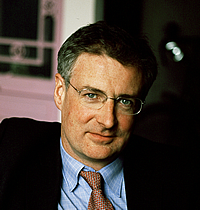
James Kynge: West Miscasts Tiananmen Protesters
From the Financial Times, James Kynge provides a critique of Western media representation of Tiananmen and provides an interesting perspective:
When I think about the massacre in central Beijing that followed weeks of demonstrations in Tiananmen Square in 1989, which I covered as part of a team of Reuters reporters, I cannot help feeling troubled.
Of course it was a brutal and harrowing time, but that isn’t the reason for my disquiet. I’m concerned because I don’t think we – the western media – got the narrative of those days quite right. People say journalism is merely a first, rough draft of history. But the problem here is that this draft appears to have been canonised, passing largely unedited into popular conscience.
I do question, however, the western media’s basic assertion that the demonstrations had been “pro-democracy”. Even now, a raft of editorials commemorating the event’s 20th anniversary repeat the mantra that the students were “demanding democracy”.





POSTED COMMENTS: 9 Responses
Good article. Even so, pointing fingers at the Western press doesn’t change the fact that hundreds were killed by a military that should have been protecting them. Similarly, it doesn’t change the fact that for 20 years, the CCP – as corrupt now as it was in ‘89 – has prevented the Chinese people from discussing the massacre. Astonishing. I don’t know whether I should be in awe of the CCP’s ability to stifle debate or disgusted with the passivity of the Chinese people. Perhaps a bit of both is in order.
From guardian by guy name Phoenixflabskin
I feel sorry for the Western media.
First there were the Olympics – what a disaster they were going to be… Oops. They were a huge success.
Never mind – here comes the global economic crash! Oh how we hopped from one foot to the other in gleeful anticipation of the collapse of the bumbling export-driven Chinese economy… Hey! The cheats! They’ve invested a trillion of actual money in fiscal stimulus. The crash hardly caused a glitch, and their economy is growing steadily again.
But Guangdong! Guangdong! The powerhouse of the economy! It’s totally dependent on exports. When it goes down, they’ll be at one another with mattocks and pitchforks! Blood on the streets… Eh? Boo! All these peasants have just gone back to their western farms, tightened their belts, and waited for things to turn round again.
Tibet! Fiftieth anniversary! One year on from the 2008 riots! That’ll kick things off… What? It’s all over. Nothing happened.
Never mind.The students! Unemployed students – they’re a boiling cauldron of resentment! One third of them have got no jobs… Oh. Seven out of eight of our graduates have got no jobs. I wish we had jobs for two thirds of our graduates.
Tian’anmen’s pretty much the last card – fourth of June and all that. I was out in the park after dinner this evening. As usual, hundreds of Beijingers strolling, dancing, chatting, playing musical instruments, singing Beijing Opera, doing Tai Ji, relaxing, enjoying themselves.
Nobody was baying at the moon, tearing their hair, rending their garments, and demanding freedom! Freedom!. Just ordinary people in an ordinary country getting on with their ordinary lives
John_01: “I feel sorry for the Western media.”
John_01 is a perfect example of what is often referred to as “Ah Q thinking” – that is, the ability convince oneself that a defeat that one has suffered is actually a great victory.
Unlike John-01, I don’t “feel sorry” for the Western media. Rather, I feel sorrier for the hundreds of Chinese citizens killed in 1989. Likewise, I feel sorrier for the Chinese who live without freedom of speech, freedom of assembly, and the protections provided by a meaningful constitution and a transparent system of laws. Finally, I feel sorrier for John_01.
@Ma Bole
LOL, as usual your thinking, analysis and understanding of both China, Western nations and politics in general, both the theory and the reality, is endearing naive and simplistic.
Soldiers, of whichever nation and contrary to popular belief, are NOT there to protect the people. It is there to protect and defend the STATE, of which the people is but one, albeit a major component. Ex. when you swear the US oath of allegiance, it is to the STATE, not to the people. Now go and research what is meant by THE STATE.
As for corruption, LOL you’ve obviously never personally encounter corruption in Western nations and their magnitude. Guess what the raison d’etre of the whole Swiss, Lichtenstein or the Cayman Islands’ banking system is?
The difference between Western and Chinese corruption is that those in the West are often far more higher up, much more sophisticated and often “semi-legalised” through accounting and tax rules, think credit crunch and sub-prime. Now go figure out the difference between tax avoidance and tax evasion or read “The Diary of an Economic Hitman”.
Now in China, the corruption is often at lower levels so that it is often much more apparent to the general population, whereas those higher up often simply cannot afford to be corrupt and especially not be caught corrupt because the risk is that much greater compare to the legal sanctions in the West.
Consequently, I believe you need to attend quite a few more years of studies yet, if not actually finish high school. Sigh, so much passion, yet so little knowledge and reasoning, sounds just like twenty years ago to this day in Beijing. Plus ca change, plus c’est la meme chose, comme on dit.
I’m not sure Kynge has this right. More journalists now write very nuanced analysis of the events. This idea of the ‘Western Media’ as a monolithic voice is inaccurate – it’s a myth that neatly suite the CCP’s purposes. Kynge should know better than to play into that propaganda.
@Paul
Perhaps. However, how much of such “nuanced analysis” gets filtered into “popular” journalism and particularly those news channels that have the largest market shares? How many people in the West read the books that provide such “nuanced” and dare we say “revisionist” analysis? Ever heard of dumbing down?
Its always easier and less of an effort to just go with the most common and popular perception and that includes journalists and editors working to a deadline.
Kynge is right. The discursive construction of the PRC is a contested field which shapes how the PRC is perceived globally including internally.
Journalism very much is the first draft of history and ‘Western’ (a bifurcating term that we could do without) journalists in Beijing in 1989 pretty much got it wrong from late June 3 on. Their work pre-crackdown was much more nuanced but not as good as the work being done at the time by PRC media.
(PRC journalists have got it wrong too since late June 3, although in their case the mitigating problem of their working situation excuses some of what they do.)
I have fairly strong feelings about Tiananmen and how it was reported (I had been teaching English in Xiamen until two days before the crackdown).
Suffice to say the ‘Adoration of Tank Man,’ including here on CDT, is typical of the discursive construction of a PRC that doesn’t exist in any real sense.
Tanks were leaving Tiananmen Square the day after the crackdown on the square itself ended. An incredibly brave, presumably angry, almost certainly upset, young man stands in their path. The lead tank driver stops. The column grinds to a halt. Tank #1 tries to go around him. He and the driver exchange words. The stand-off continues. People shuffle the young man off the street. The tanks start up and trundle on.
What is missing in the narrativization of this event then/now is any sense of why would the tank driver even contemplate running over the young man standing in front of him? The Tiananmen clearing phase of the crackdown was over. The tanks were presumably headed home.
That ‘Tank Man’ has become the universal symbol of resistance to oppression in the PRC ignores as Kynge notes the multi-faceted, contested and ambiguous character of the protests, including the presumably “oh brother, what is he doing!?” kind of subdued, tired and presumably professional banter one can imagine went on inside Tank #1 when this young man stood in their path.
Was it a democracy movement? No.
The CPC’s general secretary, Zhao Ziyang (and probably most of the CPC at the time), was pretty much in agreement with the students’ ‘demands’ (is such a term defensible, given the absence of a movement?) which were not for democracy, but for three inter-related changes that were all pretty much what a majority of Party members and perhaps half of the leadership wanted anyway: inner-party democratization, an end to official corruption and greater editorial freedom for the press.
The protests were not a movement, because to paraphrase Marx, a movement in itself is not necessarily a movement for itself. A million students, workers, onlookers, supporters, etc., on Tiananmen Square for a whole range of reasons do not make a movement.
That having been said, the Chinese claim that twenty years later all is well in the PRC is equally as myopic.
The easy (and glib) response to Kynge would be to note that the political and cultural economy of news always produces the kind of stereotyping that characterizes representations of Tiananmen on both sides.
But the reality is more complex. Journalists such as Ryszard Kapucinski have shown us a nuanced world. Institutions such as the public service broadcasting systems resist simplification in much of their work. The ‘best’ PRC media grind away at the coal face producing excellent work, despite extremely difficult working conditions. Etc.
Not sure where the “pro-China” and “anti-China” language comes from… is BSinghdee more “pro-China” than others? Why? Because his posts are longer?
[...] James Kynge: West Miscasts Tiananmen Protesters [...]