


 In this article on The Christian Science Monitor, reporter Simon Montlake explains China’s role in influencing the current crisis in Burma.
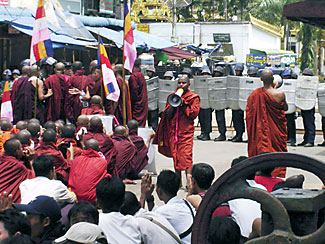
Having violently suppressed last week’s monk-led protests, Burma’s military rulers are now trying to deflect international condemnation and calls for reform. How far they succeed in resisting while keeping a lid on further unrest could hinge on the stance of influential countries in Asia.
First among them, say Western and Asian diplomats, is China, a major military and economic ally. India and countries in Southeast Asia, which have tried to coax Burma out of isolation, could also exert some leverage. By contrast, the US and other Western
powers largely shun the regime, leaving them with few diplomatic tools.
But hopes that China will arm-twist Burma’s generals into making concessions to defuse the crisis are probably wishful thinking and run counter to Chinese political and business interests, say analysts. Harder to gauge, say analysts, is how far the writ of such allies extends in Burma. “China has very little influence. It is stuck with an advisory role. The basis of Burma’s policy has been to shut itself off,” says William Overholt, head of RAND Corp.’s Asia-Pacific research center.
This topic on the Web, via Google News.