



Music Video: The Song of the Grass Mud Horse 《草泥马之歌》
[Warning: This post contains adult language!] There is little doubt that the current Internet clean-up, under the guise of an “anti-vulgarity campaign,” is the most vicious crackdown in years. Not only are porn sites targeted, but countless sites, including online discussion forums, blogs, and instant messaging groups, which touch on current affairs and other political topics have also been shuttered. How do Chinese netizens really think and feel about such state online policing efforts?
Not too long ago, a survey found that of the Chinese citizens interviewed, “almost 85% say they think the government should be responsible for [managing and controlling the Internet].”
But how about if we listen to netizens’ own expression instead of looking at checked boxes on survey questions? The following music video has become the newest hit in Chinese cyberspace in the past few days (at the time of writing (Feb 8, 2009), there are more than 12,400 posts online mentioning “The Song of ‘Grass Mud Horse (草泥马)’” ), lyrics translated by CDT:
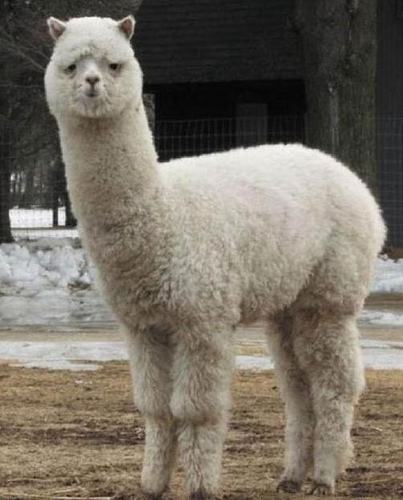
There is a herd of Grass Mud Horses*
In the wild and beautiful Ma Le Desert**
They are lively and intelligent
they are fun-loving and nimble
They live freely in the Ma Le Desert
They are courageous, tenacious, and overcome the difficult environmentOh lying down Grass Mud Horse
Oh running wild Grass Mud Horse
They defeated river crabs*** in order to protect their grass land
River crabs forever disappeared from Ma Le Desert
在那荒茫美丽马勒戈壁
有一群草泥马,
他们活泼又聪明,
他们调皮又灵敏,
他们自由自在生活在那草泥马戈壁,
他们顽强勇敢克服艰苦环境。噢,卧槽的草泥马!
噢,狂槽的草泥马!
他们为了卧草不被吃掉 打败了河蟹,
河蟹从此消失草泥马戈壁
* Grass Mud Horse (草泥马) is phonetically equivalent to “Fuck Your Mother!” in Chinese
** Ma Le Desert (马勒戈壁) is phonetically equivalent to “Your Mother’s Cunt”
*** “River Crab (河蟹) ” is phonetically equivalent to “harmony (和谐).” Chinese netizens say their deleted posts have been “harmonized,” or “eaten by the river crab.” So “river crab” became a code name for internet censors.
A blogger from Tongji University wrote the following analytical piece on the “Big Dipper” blog, translated by CDT:
The Song of “Grass Mud Horse (草泥马)” : A Public Metaphor
One talented person invented the word “Grass Mud Horse (草泥马),” then another created a spoof called “The Song of the ‘Grass Mud’ Horse.” In the anything-goes world of the internet, this alone is just a small thing. But the fact that the whole online crowd discovered this song, is singing it loudly, and takes it as their own language as a way to express themselves, is really something.
As a metaphor, everyone understands what “Grass Mud Horse (草泥马)” really means. It’s a curse that is not so appropriate for public use. But we all have the impulse to express such emotions, and therefore use the alternatives “Grass Mud Horse (草泥马)” and “Ma Le Desert (马勒戈壁).” Now “the Song of the Grass Mud Horse” appeared and has become so popular, because the meaning of such a metaphor really resonated deeply with us. Probably because this song reflected the popular psychological sentiment, it naturally became a hit.
In the song, “Grass Mud Horse” was living freely in the beautiful Ma Le Desert (马勒戈壁). but their survival faces a crisis, because the arrival of river crabs destroyed the grasses they rely on to live. What should Grass Mud horses do?
Here, the conflict between two forces is very apparent.
“Grass Mud Horse (草泥马)” originates from a dirty sentence, and its original meaning is quite offensive. But in this song, Grass Mud Horse became the representation of a charming and vulnerable animal and the singer gives them his/her sympathy.
“Grass Mud Horse (草泥马)” is not an uncivilized word and is not officially banned, therefore it can be sung publicly. Although many people use “Grass Mud horse” as an alternative curse or just use it randomly, this word and its deviant expression already generated a pattern of discourse and sub-culture. “Grass Mud Horse (草泥马)” represents such information and opinions which cannot be accepted by the mainstream discourse, and “the Song of the Grass Mud Horse” has become a metaphor of the power struggle over Internet expression.








POSTED COMMENTS: 29 Responses
[...] “grass dirt horse” but really mean something completely different and much more entertaining, see here) But now as Austin says CCTV has admitted that its employees ignored police warnings and used [...]
The song’s melody is taken from the theme song to Smurfs TV program in China
蓝精灵
[...] Digital Times has translated the Song of Grass Mud Horse, a big hit in the Internet in the past two months, in early February. In brief, Grass Mud Horse [...]
[...] Digital Times hat Anfang Februar das “Lied des Pferdes aus Gras und Lehm” übersetzt, das im Internet ein großer Hit wurde. Das “Pferd aus Gras und Lehm” [...]
[...] Digital Times hat Anfang Februar das “Lied des Pferdes aus Gras und Lehm” übersetzt, das im Internet ein großer Hit wurde. Das “Pferd aus Gras und [...]
[...] political censorship. (via Ethan Zuckerman writing up a talk by Rebecca MacKinnon onWorldchanging.) China Digital Times has an in-depth write up of the lyrics, which offer a coded song of struggle with internet censors, [...]
[...] or more distant ancestors. For more details on the actual text of the song sung in the video, China Digital Times offers an annotated translation: There is a herd of Grass Mud Horses* In the wild and beautiful Ma Le Desert** They are lively and [...]
I listened to that charming song sung by children but I don’t understand Chinese so I don’t know what the words were they were singing. To the Chinese censors, I know you have a job to do but you can’t stop ideas on the internet. Just ignore coarse language like I do. Sometimes, I use it myself but the internet is an environment that even encourages it because you, as a poster, are anonymous. I read a poem on this site with the word, “fuck” in it. Is that the rudeness the censor is objecting to?
It’s used so much on the internet that it has lost most of its meaning and impact and is actually replaced with the acronym, “WTF” meaning “what the fuck”. What I’m much more curious about is what on earth is a “grass mud horse”? I’ve never heard of this term. Does it have some hidden meaning or is that the literal translation of the Chinese word for llama? Does the animal usually graze in grass and mud? It is very strange-sounding in English. It’s more jarring than “fuck” which I hear all the time. If you reply, please write in English as I don’t know any Chinese at all.
[...] I am trying keep my blog PG, I won’t repeat it here, but if you want to know what it means, click here and scroll down. The lyrics to the song in the post also refer to the Ma Le Desert or [...]
[...] any case, here’s another link and a [...]
[...] Of course the New York Times, being the New York Times, infuriatingly doesn’t tell you specifically what the dirty pun is. Bolder readers who are over the age of 18 and not at work (and who are willing to scroll down a little bit) can find out here. [...]
Here is a translated version of the song of Grass Mud Horse
http://www.youtube.com/watch?v=wKx1aenJK08
Also, the par that was trnaslated as “running wild grass mud horse” has a double entendre, the whole also means “wildly fucking, fucking your mom”
Also its not just “lying down Grass Mud Horse” it can also mean “I fuck, I fuck your mom”
Concerning the song of the “Grass Mud Horse:” People, and especially kids, do that everywhere. When I was in elementary school in the U.S. we used to find songs with double entendres, or songs with sarcastic, alternate lyrics to be quite amusing and entertaining. As a student in Taiwan some thirty years ago, I found the same was practiced by Chinese children (much to their delight). I know similar songs in Japanese, French, and Spanish. I doubt this should be a matter of grave government concern.
[...] ran across this explanation in the China Digital Times, which managed to explain it without crossing our obscenity [...]
[...] Music Video: The Song of the Grass Mud Horse 《草泥马之歌》 (China Digital Times) [...]
[...] from China Digital Times: Music Video: The Song of the Grass Mud Horse [...]
Oh come on, you guys DON’T know anything about China at all. For Jesus’ sake, the one who coined the word “Grass Mud Horse” was purely for FUN, and we didn’t even realize there was anything to do with government censorship until the bloody CNN and NYT reported it! Gimme a break! Leave you two words:意淫!You won’t like it, trust me.
oops,i didn’t intend to say whatever i said just now to those who posted before me, sorry. I’m just a bit frustrated whenever i see people try to relate Chinese netizens’ action with government dictatorship.
Come on, TrueChinese. From what I saw, the origin of the MGH may have been all in fun, but the song about how they fight the River Crabs… It’s not exactly a revolutionary anthem, but I think it pretty clearly indicates frustration with censorship. This frustration seems pretty widespread, even on nationalist hangouts like Huanqiu Shibao. I don’t think this is entirely “YY”.
[...] used to change a profane word, banned by China’s Great Firewall (GFW), into a cuddly “Grass-Mud Horse” mascot lovable to even the strictest of net nannies, I took a second look at the name I had [...]
[...] Mud Horse Memo to self: Look into this interesting snippet of Chinese netizen subculture. The song is cute, too, and hilariously inappropriate while being [...]
[...] stands in solidarity with those advocating democracy in China, inviting comparison to the fabled “Grass-Mud Horse,” that has so expertly negotiated that government’s draconian censorship [...]
[...] stands in solidarity with those advocating democracy in China, inviting comparison to the fabled “Grass-Mud Horse,” that has so expertly negotiated that government’s draconian censorship [...]
[...] or harmonize higher ed (lets call them river crabs) and Us, (who I guess you could call the Grass Mud Horse brigade)3 Traditionally faculty like to split knowledge up into chunks, which we call classes, and [...]
zài nà huāng máng měi lì mǎ lè gē bì
yǒu yī qún cǎo ní mǎ,
tā men huó pō yòu cōng míng,
tā men tiáo pí yòu líng mǐn,
tā men zì yóu zì zài shēng huó zài nà cǎo ní mǎ gē bì,
tā men wán qiáng yǒng gǎn kè fú jiān kǔ huán jìng。
òu,wò cáo de cǎo ní mǎ!
òu,kuáng cáo de cǎo ní mǎ!
tā men wéi le wò cǎo bù bèi chī diào dǎ bài le hé xiè,
hé xiè cóng cǐ xiāo shī cǎo ní mǎ gē bì
Very very funny!!!
There are afew more “puns” in the song I think many people (esp. non-Chinese speakers) may have missed:
For example, in “Ma Le Desert”, Ma Le sounds the same as “mother’s”, a shorthand for “f**k his mother’s p***y”
In the two lines,
“Oh lying down Grass Mud Horse
Oh running wild Grass Mud Horse”,
The Chinese words for “lying down” (卧槽, pronounced as “wo tsao” )
and “running wild” (狂槽, pronouced as “kwang tsao” ) sound exactly the same as “I f**k” and “wildly f**k”;
Similarly in the next line,
“They defeated river crabs in order to protect their grass land”
The Chinese word for “protect their grass land” (or more literally, to rest on the grass, “卧草”, pronounced as “wo tsao”) again sounds the same as “I f**k”.
[...] to self: Look into this interesting snippet of Chinese netizen subculture. The song is cute, too, and hilariously inappropriate while being [...]