

Stories tagged with: Confucianism (32)
-
China Unveils its ‘Soft-power’ Campaign: Canonize Confucius, No Mention of Mao
The Globe and Mail reports on the Chinese government’s effort to use the Olympics as a means to recreate the national image:
» Read moreAt the glitzy show that China will unveil to the world at the opening ceremonies on Friday, it is Confucius again who will be exalted.
Leaks from rehearsals suggest there will be no mention of Mao or any other Communist, but plenty of ancient dynasties, calligraphy, painting, giant scrolls and a quotation from Confucius about the pleasure of welcoming “friends who visit from afar.”
The long-awaited opening of the Beijing Olympics, the biggest event in China’s recent political history, will help define China’s emerging self-image as it shifts into a new era of power and pride on the global stage.
Reaching deep into its pre-revolutionary history, China is increasingly drawing on the patriotism of its people, a patriotism based not on ideology but on the glories of China’s ancient culture, bolstered today by the technological and military prowess of an economic superpower.
-
China’s Thriving Confucian Schools - Jill McGivering
A small private confucian school was set up last year in Wuhan. Since then, more than 100 children have enrolled for classes. Parents who send their kids to the school believe that it is a good opportunity for their children to learn traditional culture that cannot be learned by modern education. From BBC News:As soon as they walk into the tiny school, a converted apartment in a tower block, the children are bundled into grey cotton wraparound robes, fastened at the back with modern Velcro.
Flowing sleeves flap round their wrists, square black hats wedged on to their heads - some, too big, slip down over the eyes….[Full Text]
[Image: Parents believe studying Confucius benefits the whole of society, via BBC]
» Read more -
Modern Gloss on China’s Golden Age - Sheila Melvin
From The New York Times:
» Read moreChina spent the greater part of the last century struggling to become a modern nation. But after so many years spent looking outward and forward, some Chinese are once again looking inward and back ” way back, to the golden age of philosophers like Confucius (551-479 B.C.) and Zhuangzi (369-286 B.C.).
The current rage for things ancient ” known as “national-studies fever” ” has led in several cities to a revival of private schools known as si shu, where children bow to statues of Confucius and memorize ancient texts about benevolence and obedience under the tutelage of teachers wearing Han-dynasty-style robes. Contemporary analyses of classic novels have become best sellers, and televised lectures in which professors expound on esoteric areas of Chinese culture and history draw tens of millions of viewers. [Full Text]
-
Yu Dan and China’s Return to Confucius - Sheila Melvin
The International Herald Tribune is the latest to look at the fad for all things Confucius thanks to trendy scholar Yu Dan:
The current rage for things ancient - dubbed “national studies fever” - has led in several cities to a revival of private schools known as “si shu” where children bow to statues of Confucius and memorize ancient texts about benevolence and obedience under the tutelage of teachers who dress in Han Dynasty-style robes. Contemporary analyses of classic novels have become best sellers and televised lectures in which university professors expound on esoteric areas of Chinese culture and history draw tens of millions of viewers.But perhaps the most conspicuous symbol of national studies fever is the continuing popularity of “Yu Dan’s Reflections on ‘The Analects,’ ” by a professor of media studies at Beijing Normal University, Yu Dan, that has sold 4.2 million legal copies and an estimated 6 million pirated versions since it was published last December. [Full text]
» Read more
[Image: Yu Dan, via the IHT] -
Racing Ahead, China Resurrects Its Past - Kent Ewing
From Asia Times:
» Read moreAs China races into its capitalist future, it is also rediscovering its philosophical and religious past.
But can the country move backward as it goes forward? Chinese leaders think so, and they are enthusiastically supporting a revival of the ancient philosophical traditions of Confucianism and Taoism. Late last month, for example, the government sponsored a six-day forum dedicated to the interpretation and promotion of Tao Te Ching (or Dai De Jing, “The Book of the Way and Its Virtue”), the foundational text of Taoism, both as a school of thought and a religion, written 2,500 years ago by Lao Zi.
-
Yu Dan: Defender of Traditional Culture, Force for Harmony - Joel Martinsen
Following up on the recent LA TImes article about Confucian scholar Yu Dan, Danwei has translated two articles, from BQ Weekly and Southern Metropolis Daily, about the controversy over Yu’s writing. From the BQ Weekly article:
» Read moreSo who were these people instigating this small cultural demonstration? Careful inspection of its origin reveals nine PhDs and MAs from Peking University and Tsinghua University. There’s an old Chinese saying that goes, “A scholars’ rebellion takes ten years or more”; when scholars form an alliance, they do not wait to launch a revolt against others, but rather dissolve into internal struggles for nine years. [Full text]
-
Professor Puts Confucius Back in Vogue - Ching-Ching Ni
The Los Angeles Times reports on the current fad for Confucius, and the woman who started it all:
Since the publication of her enormously popular book on the teachings of Confucius late last year, Yu has been racing from college lectures to book signings, TV appearances and speaking engagements. The public can’t seem to get enough of this overnight sensation who has turned dusty old Confucian teachings into a Chinese version of “Chicken Soup for the Soul.”“I never expected this,” the smartly dressed 42-year-old said in a hurried interview from the back of the black Audi taking her to the airport. “In the 21st century, our value system is changing; people are faced with a lot of confusion and choices. The classics are not just fossils. They are a value system that can help us find answers to modern-day problems.” [Full text]
- Read also a comment on this article from the Useless Tree blog.
» Read more -
China’s Values Vacuum - Alice Poon
From Asia Sentinel:
» Read moreIn China, the empathy deficit is not only at a worrying level but seems to be further compounded by what intellectuals call a “values vacuum.” In one of his blog posts, Financial Times Chinese web columnist Xu Zhi-yuan said, “The ideals of the past are no longer effective. Yet worship of money can only be a temporary substitute. We cannot possibly transplant Christianity onto Chinese soil, nor can we simply revive our ancients’ values.”
It may not be mere coincidence that there has been recent talk of the revival of Confucianism and even Taoism in China. Beijing has just endorsed Hong Kong’s decision to make Confucius’s birthday a public holiday. Yu Dan, a Beijing Normal University media professor, recently published a book called “Thoughts on the Analects of Confucius” that has sold 2 million copies. [Full text]
-
Confucius Comes Back - Paul Mooney
From the Chronicle of Higher Education:
» Read moreNow, almost a century after Confucianism first came under attack as an obstacle to development, it is being heralded as a solution to the many political, economic, and ethical problems China faces.
In addition to impressive economic gains over the past 30 years, China has experienced a growing gap between rich and poor and a rise in corruption, crime, and divorce. Academics say few people still believe in Marxism or Communism, but nothing has risen yet to take its place, leaving an ideological vacuum. People clearly feel something is lacking.
-
The Useless Tree: Speaking of the Confucian Mind…. - Sam Crane
From The Useless Trees blog:
» Read moreI often worry that the tone of this blog is too critical. I find myself playing the scold, using Confucianism or Taoism to complain about this or that happening in China or the US. I do not have enough positive stuff here. Well, happily, here is something good: Yu Dan, a media scholar from Beijing Normal University has made a big splash across China with her televised lectures on the Analects that were broadcast last month during the National Day holiday. I had not heard of it at the time (nor did it come up at the conference), but this China Daily story a couple of days ago makes me think that she is doing the right thing [Full Text]
-
Family tree of Chinese sage branches out to include women - Jonathan Watts
From the Guardian, another article about the rejuvenation of Confucius’ legacy in China:
» Read moreIt has taken almost 2,557 years, but the family tree of Confucius, the philosophical father of Asia’s male dominated society, is finally going to acknowledge women. Female descendants will be recognised in a new lineage chart of the Chinese sage’s family - forecast to grow to more than three million people by the time the survey is complete in 2007.
The change, announced ahead of today’s birthday celebrations in Confucius’s hometown of Qufu, reflects a growing move to reinterpret and apply the ancient teachings, as the world’s most populous nation moves further and further away from Marxism. [Full text]
-
Confucius’s standard portrait unveiled in Shandong - Xinhua
From Xinhua:
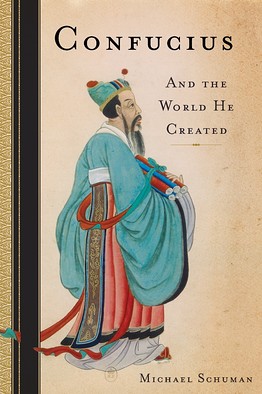
The standard portrait of Confucius is unveiled by the China Confucius Foundation (CCF) in an effort to give him a recognizable identity around the world in Qufu, East China’s Shandong Province September 23, 2006. Born in 551 BC, Confucius was considered one of the most reputed philosophers and thinkers in China.
Related Chinese article of “Launching the standard portrait of Confucius Not For Commercial Purpose” from Xinhua
Read Da Niu’s blog about “Criticize Confucius and Respect Confucius — A Thirty Years Drama“, saying
» Read more
some poeple in our country always like to make the other people, especially the Japanese, to remember the history well. But themselves often forget history selectively. Since now it is advocated to respect Confucious again, it is also neccesary to make references and comments on the the carzy hitorical period when Confucious was severely criticized during the Culture Revolution. In case, the younger generations will know nothing about their parents and grandparents’ experience, which was a drama lasting for 30 years. -
China’s leaders rediscover Confucianism - Daniel A. Bell
In the International Herald Tribune, Daniel Bell writes:
Marxism no longer serves as Chinese society’s guiding ideology. But that doesn’t mean the end of ideology. Western experts hope liberal democracy will fill the void, but they will have “joined Karl Marx,” as the Chinese used to say, before that happens.
In China, the moral vacuum is being filled by Christian sects, Falun Gong and extreme forms of nationalism. But the government considers that such alternatives threaten the hard-won peace and stability that underpins China’s development, so it has encouraged the revival of Confucianism. [Full text]
For more on Daniel Bell’s views on Confucianism and Chinese politics, listen to his interview on the NPR program On Point. Read also a People’s Daily editorial about modern uses of Confucianism, and a response from The Useless Tree blog.
» Read more -
China and Confucian Democracy? - On Point
The NPR program On Point is now broadcasting a program on China and Confucian Democracy, featuring Xiao Qiang, Daniel Bell and Jonathan Kaufman. Listen to it here.
» Read more -
Can the Sage Save China? - Benjamin Robertson and Melinda Liu
From Newsweek (link):
» Read more
China’s official buzzword these days is “harmony.” Whether the audience is Chinese or foreign, rich or poor, Beijing’s leaders are spreading the message: can’t we all just get along? After becoming president in 2003, Hu Jintao made the pursuit of a “harmonious society” his personal mantra. Last week Prime Minister Wen Jiabao echoed the same sentiment before the current session of China’s Parliament; the gathering has focused on improving health care and education for the rural poor, who have increasingly been left behind by China’s economic boom. Foreign Minister Li Zhaoxing has got into the act, too, trying to market the message abroad. “The Chinese nation has always pursued a life in harmony with other nations, despite differences,” he said recently. What few of China’s top leaders acknowledge out loud, however, is that Hu’s slogan actually harks back to a famous”and ancient”Chinese personality: Confucius.
HIGHLIGHTS
- Where Are Chinese (And Bangladeshi) Internet Police Being Trained?
- Shenzhen Activists Distribute “Democracy Survey” Pamphlets On The Streets (With Photos)
- Liu Bolin: Urban Camouflage (Photo Series)
- “A Chinese Environmental Model for Export” - A Short Film Screening and Presentation
- Media Commentary On Mass Incidents: Masses ‘Out Of Touch With The Facts’ Is Official Dereliction Of Duty
- Chinese Students Inform On Political Science Professor (Updated)
- American Rock Band Releases “Chinese Democracy” (Video Added)
- Xu Zhiyong: Destined To Fight For Social Justice
- Lian Yue: Keep the Pessimism In Your Heart
- Liang Jing, Obama’s New Deal and the Fate of China’s Migrant Workers
ARCHIVES
RECENT COMMENTS
CHINA SLIDESHOW
www.flickr.com
|
HIGHLIGHTS ARCHIVE
- Super Voice Girls and Democracy - ESWN
- The Discriminatory Complex Beneath Our Consciousness
- The Sichuan Diaries: A China Journey - Evan Osnos and Wes Pope
- “Ghost Hunt” Prompts Officials to Rein in Embezzlement of Relief Tents
- Translation of the Filtered Key Words in Chinese Cyberspace
- Netizens in China Compile List of Schools Collapsed in Earthquake
- Slideshow: All About Train Tickets
- CDT Bookshelf: Interview with James Mann
- Five Official Newspapers Run Identical Front Pages On The Same Day
- China’s Dream of Becoming a “Great Power” Again